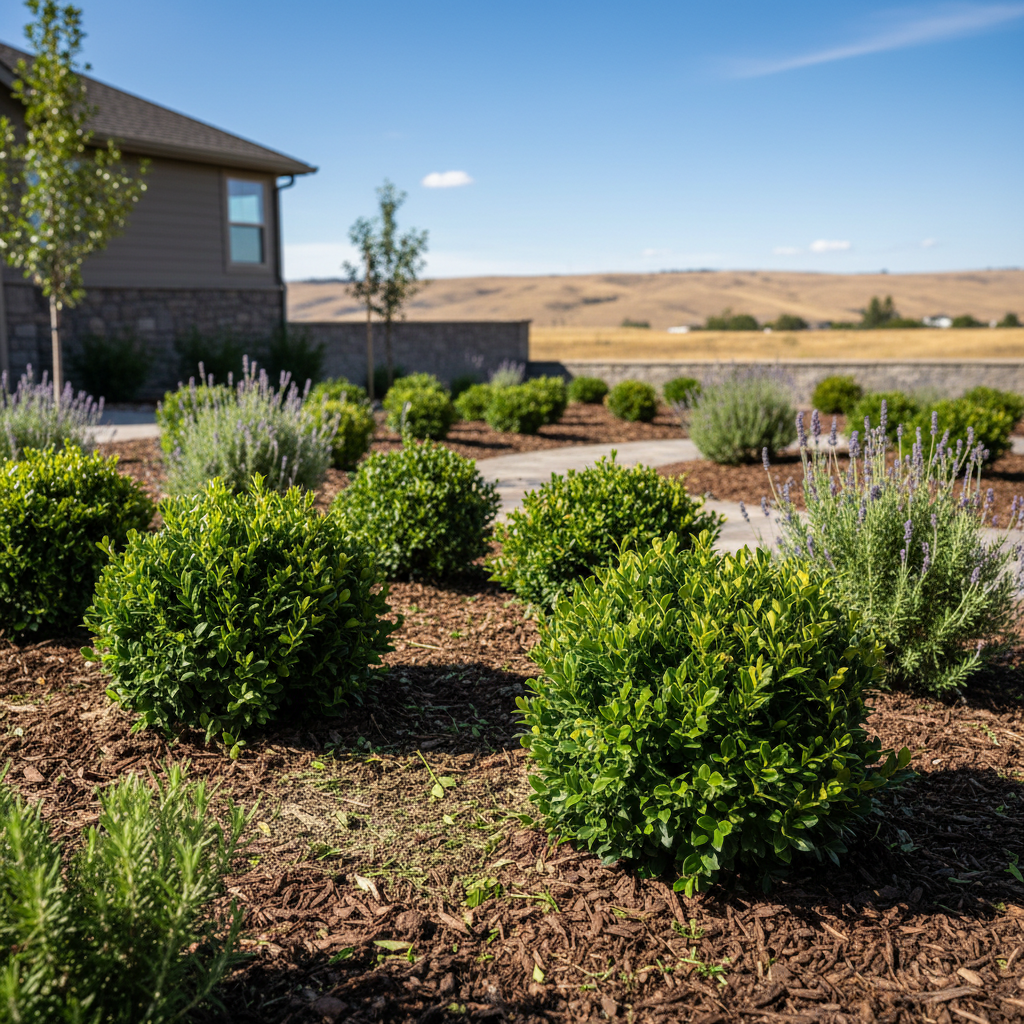
When's the best time to trim my shrubs and bushes?
This is probably the most common question I get, and honestly, it depends a lot on the type of shrub you're dealing with. For most deciduous shrubs (the ones that lose their leaves in winter), the general rule is late winter or early spring, right before new growth starts. Think February or March here in Kennewick, before we really get into the growing season. This timing lets you shape them up, remove any dead or damaged branches, and encourages a burst of new growth that'll quickly fill out. For evergreen shrubs, you can often do a light trim almost any time, but if you're doing a heavier prune, early spring or late summer/early fall is usually best. You don't want to do a heavy prune too late in the fall, especially on evergreens, because that new growth won't have time to harden off before winter hits, and it can get damaged by frost.
How often do my shrubs need trimming?
Again, it's not a one-size-fits-all answer. Fast-growing shrubs, like some privets or certain types of junipers, might need a light trim a couple of times a year to keep them in bounds and looking tidy. Slower-growing shrubs, or ones you want to maintain a more natural shape, might only need attention once a year, or even every couple of years. It also depends on your goals. Are you trying to maintain a formal hedge? That'll need more frequent, precise trimming. Just trying to keep a bush from taking over your walkway? Less frequent, more functional cuts. I always tell folks to observe their plants. When they start looking shaggy, overgrown, or like they're blocking light from other plants, it's probably time.
What's the difference between 'pruning' and 'trimming'?
Good question, and people use these terms interchangeably a lot, but there's a subtle difference in the trade. 'Trimming' usually refers to cutting back growth to maintain a specific size or shape, like shearing a hedge or giving a bush a haircut to keep it neat. It's often about aesthetics. 'Pruning,' on the other hand, is generally more about the health and structural integrity of the plant. This involves removing dead, diseased, or damaged branches, thinning out crowded areas to improve air circulation, or making cuts to encourage better flowering or fruiting. You prune for the plant's benefit, you trim for its looks (and sometimes for its health too). Both are important for a healthy landscape, but they have slightly different focuses.
Can I trim my own shrubs, or should I call a professional?
For small, routine maintenance trimming on most common shrubs, absolutely, you can do it yourself. If you've got a pair of hand pruners or small hedge shears and your shrubs aren't too big, go for it. Just make sure your tools are sharp and clean. However, there are times when calling someone like Kennewick Tree Guys makes a lot of sense. If you have large, overgrown shrubs that are taller than you, or if they're thorny, dense, or near power lines, that's when it gets tricky and potentially dangerous. Also, if you're not sure what you're doing, or if you need specific structural pruning to rejuvenate an old, neglected shrub, a pro can make the right cuts to ensure the plant recovers well and thrives. We've seen plenty of shrubs butchered by well-meaning homeowners, and sometimes it takes years to fix that kind of damage.
How do I avoid damaging my shrubs when trimming?
First off, use the right tools for the job, and make sure they're sharp. Dull blades tear and crush plant tissue, which makes it harder for the plant to heal and leaves it open to disease. Second, don't overdo it. A good rule of thumb is to never remove more than about a third of a shrub's total foliage in one go. If you're doing a major renovation, spread it out over a couple of seasons. Third, understand where to make your cuts. For most shrubs, you want to cut back to a side branch, a bud, or the main stem. Avoid leaving stubs, which are just invitations for disease and don't look good. And finally, know your plant. Some shrubs, like lilacs, bloom on old wood, so if you prune them in late winter, you'll cut off all your flowers for the year. Others, like hydrangeas, can bloom on new or old wood depending on the variety. A little research goes a long way.
My shrubs are really overgrown. Can they be saved?
Often, yes! Many shrubs are incredibly resilient. For severely overgrown shrubs, we often recommend what's called 'rejuvenation pruning' or 'renewal pruning.' This involves cutting the shrub back hard, sometimes almost to the ground, to encourage a whole new flush of growth. It sounds drastic, and it is, but for many deciduous shrubs like overgrown spirea, forsythia, or even some types of dogwood, it works wonders. It's best done in late winter. You'll have a year or two where the plant looks pretty bare, but then it'll come back fuller and healthier than ever. For some evergreens, you can't go quite as hard – they don't always sprout from old wood like deciduous shrubs do. But even for them, a careful thinning and gradual reduction over a couple of years can bring them back into shape. We've brought back some real monsters in neighborhoods like Canyon Lakes, and it's always satisfying to see them thrive again.