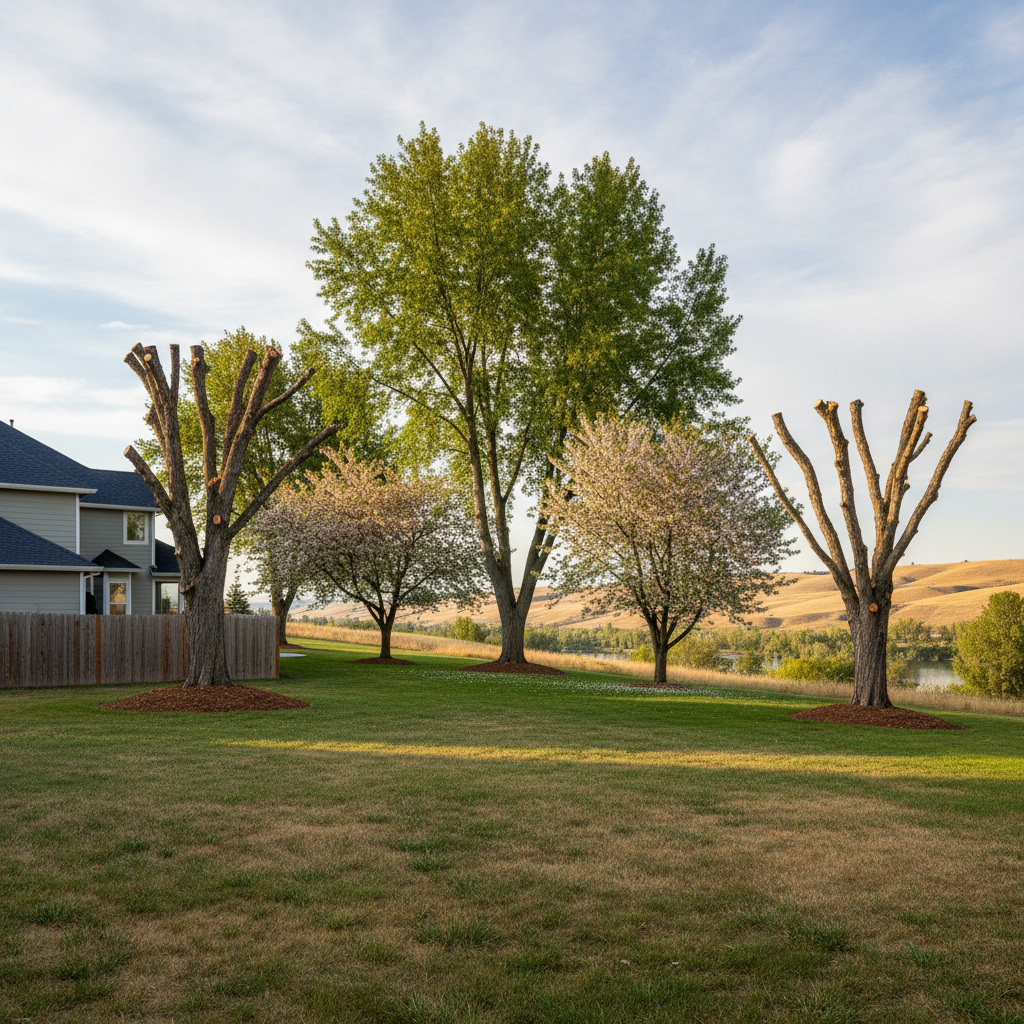
Alright, let's talk about pruning. It's one of those things folks often put off, or they try to tackle it themselves with a ladder and a saw, and that's usually when I get the call. But knowing when to prune your trees here in Kennewick is just as important as knowing how to do it right. Get the timing wrong, and you could actually hurt your tree, not help it.
Why Timing Your Pruning Matters
You wouldn't cut your hair in the middle of a blizzard, right? Well, trees are a bit like that. Their growth cycles, sap flow, and vulnerability to pests and diseases all change with the seasons. Pruning at the wrong time can stress a tree, make it susceptible to disease, or even stunt its growth. We're talking about protecting your investment here, because a healthy, well-maintained tree adds real value to your property.
The Best Time: Dormant Season Pruning
For most deciduous trees (the ones that lose their leaves), the absolute best time for major pruning is during their dormant season. That means late fall, winter, or very early spring, after the leaves have dropped but before new buds start to swell. Why then?
- It's easier to see: Without leaves, you can clearly see the tree's structure, identify dead or crossing branches, and make good decisions about where to cut.
- Less stress: The tree isn't actively growing, so it's not expending energy on new leaves or flowers. It can heal more efficiently.
- Pest and disease prevention: Many pests and diseases are inactive in colder weather, so pruning wounds are less likely to attract them.
- Faster healing: When spring arrives, the tree's energy reserves go straight into healing those cuts and pushing out new, healthy growth.
Think about our Kennewick winters. We often get those clear, cold days, sometimes with a good hard freeze. That's prime time for dormant pruning. Just avoid pruning when it's actively freezing or right before a deep freeze, as that can cause bark splitting or frost damage to fresh cuts.
What About Summer Pruning?
Summer pruning has its place, but it's usually for lighter work. If you're just doing some minor shaping, removing small suckers, or taking out a few dead branches, summer's fine. It can also be used to slow down growth on an overly vigorous branch. However, heavy pruning in summer can stress the tree, especially during our hot, dry Kennewick summers. When the mercury hits 95 degrees for days on end, a tree is already working hard to keep itself hydrated. Adding a big pruning job on top of that is just asking for trouble.
When to Avoid Pruning
There are a couple of times you really want to keep the pruners sheathed:
- Early spring: Once buds start to swell and leaves emerge, the tree is putting a lot of energy into new growth. Pruning then can cause excessive sap bleeding (especially on maples and birches) and reduce the tree's energy reserves.
- Late fall (right before a hard freeze): While dormant pruning is good, making large cuts right before a severe cold snap can expose fresh wood to frost damage.
Protecting Your Investment Year-Round
Beyond just pruning, there are other things you can do. Make sure your trees are getting enough water, especially during our dry spells. Even mature trees, particularly those in newer developments like those around Badger Mountain, can struggle if they aren't getting consistent moisture. Mulching around the base helps a lot. And keep an eye out for anything that looks off – unusual leaf discoloration, sudden branch dieback, or strange growths. Catching problems early can save a tree.
Ultimately, a healthy tree is a safe tree. Proper pruning, done at the right time, isn't just about making your yard look good; it's about the tree's long-term health and preventing potential hazards. If you've got questions about a specific tree or a big job, don't hesitate to give us a call at Kennewick Tree Guys. We're happy to take a look and give you our honest opinion.