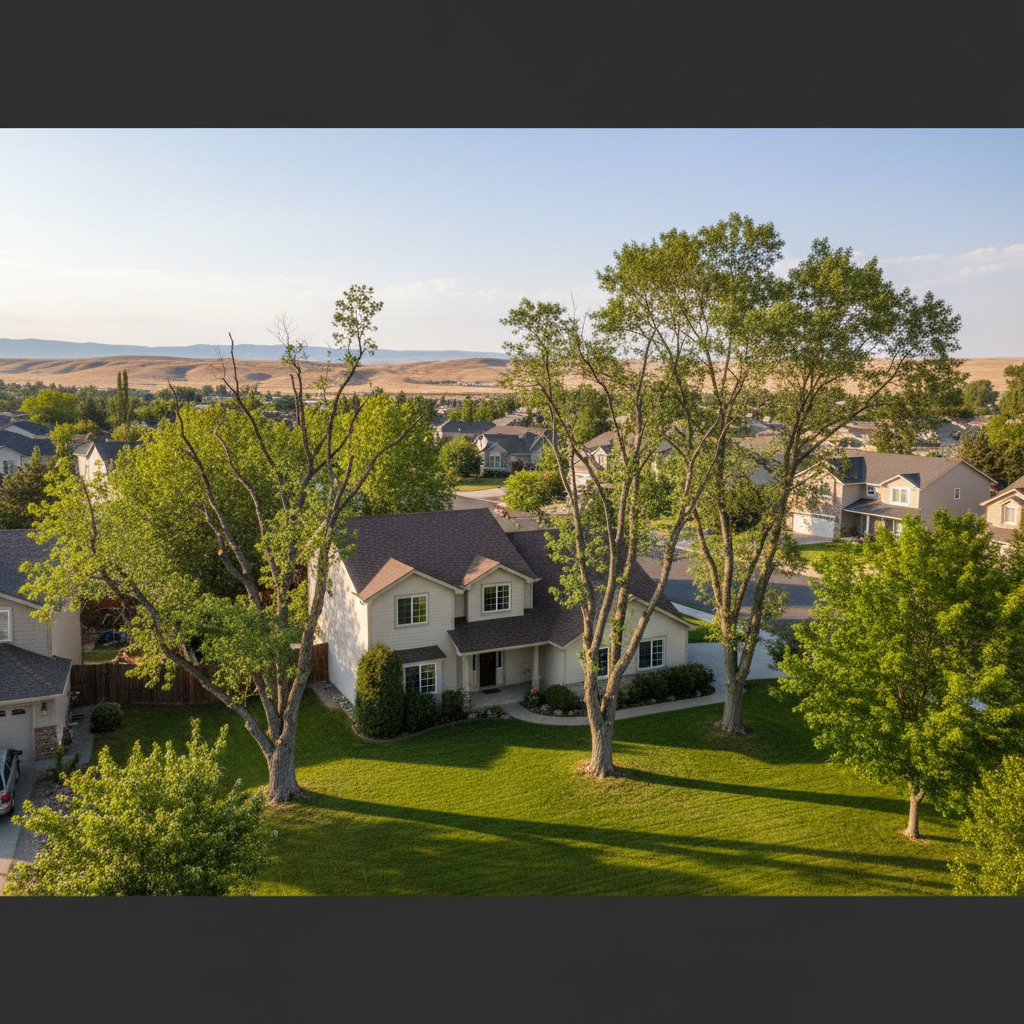
You've got trees on your property, right? And sooner or later, they're going to need a trim. Maybe it's just a few unruly branches, or maybe it's a big old shade tree that's looking a little wild. Whatever the case, you might think, "How hard can it be? Grab a saw, get up there, and start cutting." But here in Kennewick, it's not always that simple. There's a lot more to good tree trimming than just lopping off limbs, especially if you want your trees to stay healthy and your property to stay safe.
Our Kennewick Climate Isn't Always Tree-Friendly
We all know Kennewick weather can be a bit… extreme. Hot, dry summers, sometimes windy, and then those cold snaps in winter. These conditions put a lot of stress on trees. When you trim a tree, you're essentially creating a wound. How that wound heals, and how the tree recovers, is heavily influenced by our local climate. If you trim at the wrong time, or make bad cuts, you're inviting disease, insect infestation, or even sun scald, which can be a real problem for some species around here, especially younger ones.
For instance, some folks might try to do a heavy trim right before a scorching July. That's a recipe for disaster. The tree loses a lot of its protective canopy, and the exposed bark can get scorched, weakening the tree significantly. A local pro, someone who's been working with trees in this area for years, knows exactly when to trim different species to minimize stress and promote healthy growth. We've seen firsthand what happens when trees are trimmed incorrectly in our specific climate, and trust me, it's not pretty.
Understanding Local Tree Species and Soil Conditions
Walk around Kennewick, whether you're in the older established neighborhoods near Columbia Center Boulevard or out in the newer developments by Badger Mountain, and you'll see a pretty diverse range of trees. We've got everything from sturdy oaks and maples to fast-growing poplars and even some fruit trees. Each species has its own growth habits, its own ideal trimming schedule, and its own vulnerabilities. You wouldn't trim a weeping willow the same way you'd trim a ponderosa pine, and you certainly wouldn't trim a young ornamental cherry like you would an old cottonwood.
Then there's our soil. We've got a lot of sandy, well-draining soil in many parts of town, but it can also be pretty alkaline. This affects how trees grow and how they recover from pruning. A tree that's struggling in poor soil is going to be much more susceptible to damage from an aggressive trim. Knowing these local nuances helps us make the right call on how much to trim, and when, to ensure the tree thrives, not just survives.
Safety Isn't Just About Ladders
Of course, there's the obvious safety aspect. Climbing ladders, using chainsaws, working around power lines – that's dangerous stuff. You wouldn't believe some of the close calls I've heard about (and thankfully, not experienced) from homeowners trying to tackle big trimming jobs themselves. But safety goes beyond just not falling off a ladder.
It's also about the long-term safety of your property. An improperly trimmed branch can become weak and break off in a windstorm, damaging your roof, your car, or even injuring someone. We've seen plenty of wind here that can turn a weak branch into a projectile. A good trim isn't just about making the tree look neat; it's about identifying and removing branches that could become hazards down the line. We look for deadwood, crossing branches that rub and weaken, and limbs that are growing too close to structures or power lines. That's a big part of what we do at Kennewick Tree Guys – keeping your property safe.
What a Professional Trimmer Actually Does
When you hire a professional for tree trimming, you're not just paying for someone to cut branches. You're paying for their knowledge, their experience, and their specialized equipment. We're looking at the tree's overall health, its structure, and its future growth. We're thinking about:
- Crown Thinning: Removing select branches to improve air circulation and light penetration, which is super important for preventing fungal issues in our humid spring and fall.
- Crown Raising: Lifting the lower canopy to provide clearance for pedestrians, vehicles, or buildings. Essential for those trees growing over sidewalks in older Kennewick neighborhoods.
- Crown Reduction: Carefully reducing the height or spread of a tree, often to prevent interference with power lines or structures, without