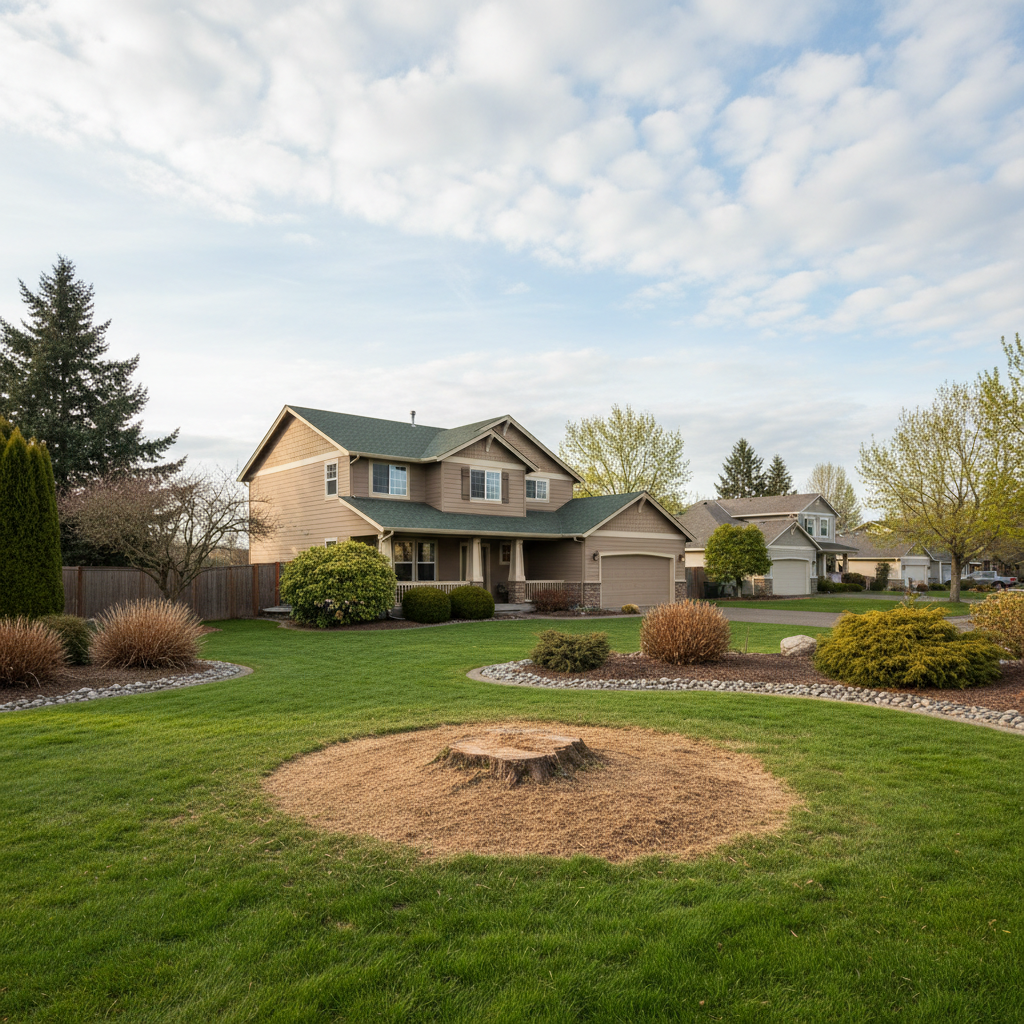
Got an old tree stump staring back at you from your yard? Happens all the time, doesn't it? It's a pretty common sight around Kennewick, especially with folks taking out older, overgrown trees. But when it's time to get rid of that stump, a lot of people just think 'stump grinding' and that's the end of it. Trust me, there's more to the story, and understanding the difference between grinding and full removal can save you a real headache down the road.
Why Not Just Leave the Stump?
I get it, sometimes you just cut down a tree and figure the stump can just sit there. Maybe you'll put a planter on it, or try to ignore it. But leaving a stump in your yard, especially in our climate here in the Tri-Cities, isn't usually a great idea. For one, it's an eyesore. It breaks up the flow of your lawn and makes mowing a pain. You're constantly maneuvering around it, and if you hit it with your mower, well, that's a repair bill you definitely don't need.
Beyond how it looks, stumps are a magnet for pests. Termites, ants, beetles – they all love a decaying piece of wood. You really don't want to invite those critters closer to your house, do you? Plus, a stump can be a tripping hazard, especially for kids playing in the yard. And if you've got a stump that's still got some life in it, it can sprout new growth, which means you're constantly battling suckers trying to turn back into a tree. It's just not worth the hassle.
Stump Grinding: The Quick Fix
Now, stump grinding is definitely the most common method people ask for, and for good reason. It's efficient. We bring in a specialized machine that has a big, rotating cutting wheel. That wheel grinds the stump down into wood chips, usually a few inches below ground level. It's effective for getting rid of the visible part of the stump and making your yard look a lot cleaner.
After grinding, you're left with a pile of wood chips and a hole. You can use those chips as mulch, or we can haul them away for you. Then you can fill the hole with topsoil, plant grass, or even put in a new garden bed. It's a great option for most situations where you just want the stump gone and don't need to dig up the entire root system.
However, it's important to understand what grinding doesn't do. It doesn't remove the entire root ball. Those roots are still down there, slowly decaying. Most of the time, this isn't an issue, especially if the tree was healthy when it was cut. But sometimes, those decaying roots can create sinkholes over time as they break down, or they can still harbor some of those pests I mentioned earlier.
Stump Removal: The Whole Shebang
When we talk about full stump removal, we're talking about getting rid of the entire stump and as much of the major root system as possible. This is a much more involved process. Sometimes it means using heavy equipment to dig out the whole thing; other times it's a combination of grinding and then excavating the remaining root ball by hand or with smaller machinery.
Why would you go this route? Well, if you're planning to build something right where the stump was – say, a new patio, a foundation for a shed, or even a swimming pool – you absolutely need full removal. You don't want a decaying root system undermining your construction project years down the line. Also, if the tree was diseased, like some of the older elms we see around the Highlands or Canyon Lakes areas, you might want to remove the entire root system to prevent the disease from spreading to other plants or lingering in the soil.
Another reason for full removal is if you're worried about those future sinkholes or persistent pest issues. It gives you a completely clean slate. It's more labor-intensive, takes longer, and costs more, but for certain projects, it's the only way to go.
Why Local Expertise Matters Here in Kennewick
You might think a stump is just a stump, but our local conditions here in Kennewick can definitely play a role. We've got pretty tough, often clay-heavy soil in many areas. This kind of soil can make stump removal, especially digging out roots, a real challenge. A contractor who knows our local soil types understands how to approach the job without tearing up your whole yard or getting stuck. They'll also know about common tree species in the area – like the poplars or silver maples that have really extensive, shallow root systems – and how best to tackle them.
Plus, a local company like Tri Cities Tree Service is familiar with local regulations. While stump removal usually doesn't require permits, knowing the lay of the land, property lines, and potential underground utilities (which we always call 811 for, by the way!) is crucial. You don't want some out-of-town crew coming in and guessing.
So, when you're looking at that old stump, don't just think 'grind it.' Think about what you want for your yard in the long run. Give us a call, and we can talk through your options and figure out the best approach for your specific situation. We'll make sure that stump problem is truly gone, not just hidden.